Organic Farming in Tanzania: Opportunities and Challenges
Organic farming offers Tanzanian growers premium prices and healthier soil, but success depends on training, certification, and guaranteed market access.
Organic farming has moved from a niche interest to a serious commercial choice in Tanzania. Health-conscious local buyers, premium supermarkets, and export markets are all paying closer attention to how food is grown, and that shift creates a genuine opportunity for farmers who get the transition right.
The opportunity is really twofold. First, organic produce often commands a better price, particularly in export markets and premium retail, where buyers are willing to pay for verified growing standards. Second, and just as important over the long run, organic methods protect the asset every farmer ultimately depends on: the soil.
This premium is not abstract. Supermarkets in Tanzania's own cities are increasingly willing to stock organic produce at a higher price point, and export buyers in the Gulf and the Seychelles single out organic and GMO-free growing as a genuine point of difference rather than a marketing label. For a farmer, that gap in price is what makes the extra work of organic cultivation worth the trouble.
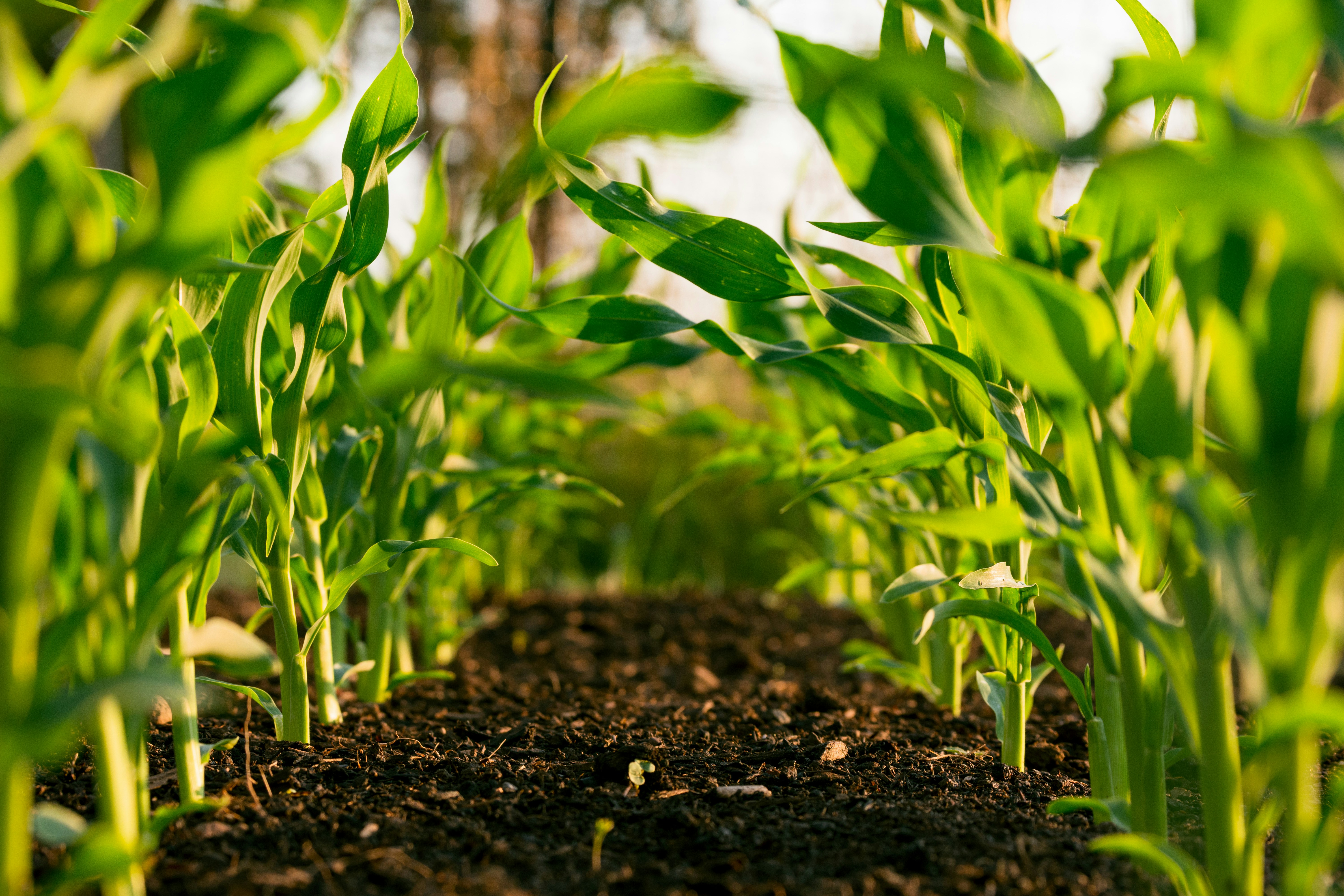
Practices such as crop rotation, green manure, and biological pest control build fertility into the land over time rather than mining it season after season. Where conventional intensive farming can leave soils depleted after years of chemical inputs, organic methods are designed to keep the same plot productive for the farmer's children as well as the farmer.
But organic farming is honest work, and it comes with real challenges that should not be understated. Yields can dip in the early years while soils recover and rebuild biological activity. Natural inputs such as compost and bio-pesticides require more knowledge and more careful timing than simply applying a synthetic product on a fixed schedule, and formal certification takes both effort and money to obtain and maintain.
Certification adds a further layer of complexity on top of the growing itself. Standards such as the East African Organic Mark require documented practices, consistent record-keeping, and periodic verification, all of which take time that a smallholder farming alone would struggle to spare. This is one of the clearest places where an individual farmer benefits from being part of a larger, organised network rather than pursuing certification independently.
Without training and a clear route to market, many farmers find this transition hard to sustain. The extra labour and patience organic farming demands only makes sense if there is a buyer on the other end willing to pay for it consistently — otherwise farmers understandably drift back toward whatever is fastest and cheapest in the short term.
At TanzPro Greens, our answer has been structure rather than persuasion. We train rural farmers, more than 50 of them under contract and around 70 percent of them women, in organic cultivation methods, and in return we guarantee them a route to market for what they grow. Organic farming only works at scale when the farmer is supported from seed all the way through to sale.
This support is anchored in two established sites in the Mkuranga District of the Coastal Region: the Mitaranda Organic Project, running since 2016, and the more recent Kisele Organic Project, added in 2018. Growing both projects over multiple years has given us a working, tested model for organic transition rather than a one-season experiment.
Between them, the Mitaranda and Kisele projects have now been running for the better part of a decade, giving TanzPro Greens a track record across different seasons, rainfall patterns, and market conditions rather than a single good harvest to point to. That history matters to buyers evaluating whether an organic supplier can be relied on year after year, not just once.
Quality control matters just as much as the growing itself. We manage standards across the whole chain — cultivation, harvesting, sorting, grading, and packaging — so that the word 'organic' is backed by consistent, visible quality rather than serving as a label alone. A buyer should be able to trust every carton as much as the last one.
That trust is reinforced by the certifications and principles we hold: the East African Organic Mark (Kilimohai), membership of the Tanzania Organic Agriculture Movement (TOAM), and adherence to Fair Trade principles across the farmer network. All produce is 100 percent GMO-free, grown using bio-pesticides and natural fertilisers rather than synthetic chemical alternatives.
The sustainability commitment extends beyond the growing method itself. Drip and rain-fed irrigation reduce water waste, composting turns farm waste back into fertility, and a tree-planting programme — 50 trees for every tonne exported — ties the farm's environmental footprint directly to what leaves the farm gate.
Biological pest control and composting are not simply substitutes for chemical alternatives; they change how the farm behaves over time. Composting returns nutrients harvested from one season directly into the soil for the next, while biological pest control relies on managing the surrounding ecosystem rather than repeatedly applying a broad-spectrum product. Both approaches ask more of the farmer's knowledge and attention than a conventional input schedule would.
This model now spans a wide range of crops: tomatoes, cherry tomatoes, peppers and chillies, cucumbers, cabbage, carrots, onions, and beans sit alongside avocado, pineapple, and passion fruit, plus ginger, garlic, herbs and spices, and value-added products such as moringa powder, roselle powder, organic honey, and sunflower oil. That breadth shows organic methods can work well beyond a single flagship crop.
For Tanzania, organic farming is not only a market opportunity but a sustainability strategy in its own right. Done well — with training, certification, and a guaranteed market built in from the start — it produces healthier food, more resilient farms, and stronger rural communities all at the same time.
If you grow, buy, or are simply curious about organic produce from Tanzania, TanzPro Greens is happy to talk through what we do and how the model works. Reach us by phone at +255 713 398 485 or by email at om@tanzpro.co.tz.
Ready to source from Tanzania?
Tell us the products, volumes and destination you need — we'll reply with availability, packing options and pricing.